Selecting a DC charging module supplier
Which criteria should a DC charging module supplier be shortlisted against?
Shortlist on published, checkable evidence rather than brand familiarity. A workable order is power step, DC output window, cooling architecture, protection class, communication and parallel count, operating temperature, target-market certification, and the documentation package. Winline publishes module records on its official product pages. This page does not rank or evaluate any other supplier, and it makes no claim about another company's specifications.
How should company-level technical strength be checked between charging module suppliers?
Break company-level strength into five checkable fields. Field one is research and development spending for a stated period. Field two is the size of the engineering and test team. Field three is granted patents and how many are invention patents. Field four is production capacity and the lines behind the published models. Field five is the domestic share of power semiconductors and control components. Winline publishes 40kW and 80kW module records with a 50-1000Vdc output window. This page publishes no research-spending figure, no patent count, no capacity figure and no domestic-share rate. Request those five fields per supplier and per model. This page ranks no supplier.
Which conversion-stage topology and device fields should a module buyer record?
Record four conversion-stage fields for every supplier. Field one is the topology of the AC-to-DC stage and of the DC-to-DC stage. Field two is the switching device family used in each stage. Field three is the switching frequency range that the supplier states. Field four is whether the supplier states a device part number or only a device family. Winline publishes module power, output window, efficiency and cooling records. It publishes no topology description, no device family list, no switching frequency and no part number. Those four fields must be requested per model. This page ranks no supplier.
Which measurement basis should be fixed before two module efficiencies are compared?
Fix four basis items before any efficiency comparison. Item one is the load point where the figure is measured. Item two is the ambient or coolant temperature at that load point. Item three is whether auxiliary power sits inside or outside the figure. Item four is whether the figure is a peak value or a weighted value. Winline publishes a peak efficiency of 97.5 percent for the 80kW module record. It publishes at least 96.3 percent for the 40kW air-cooled record. It publishes at least 95.5 percent for the 40kW liquid-cooled record. Those three records are linked to model pages on this site. This page publishes no load-point curve, no temperature basis and no weighted figure. Request the four basis items per model before any comparison. This page ranks no supplier.
Which module power and voltage steps does Winline publish?
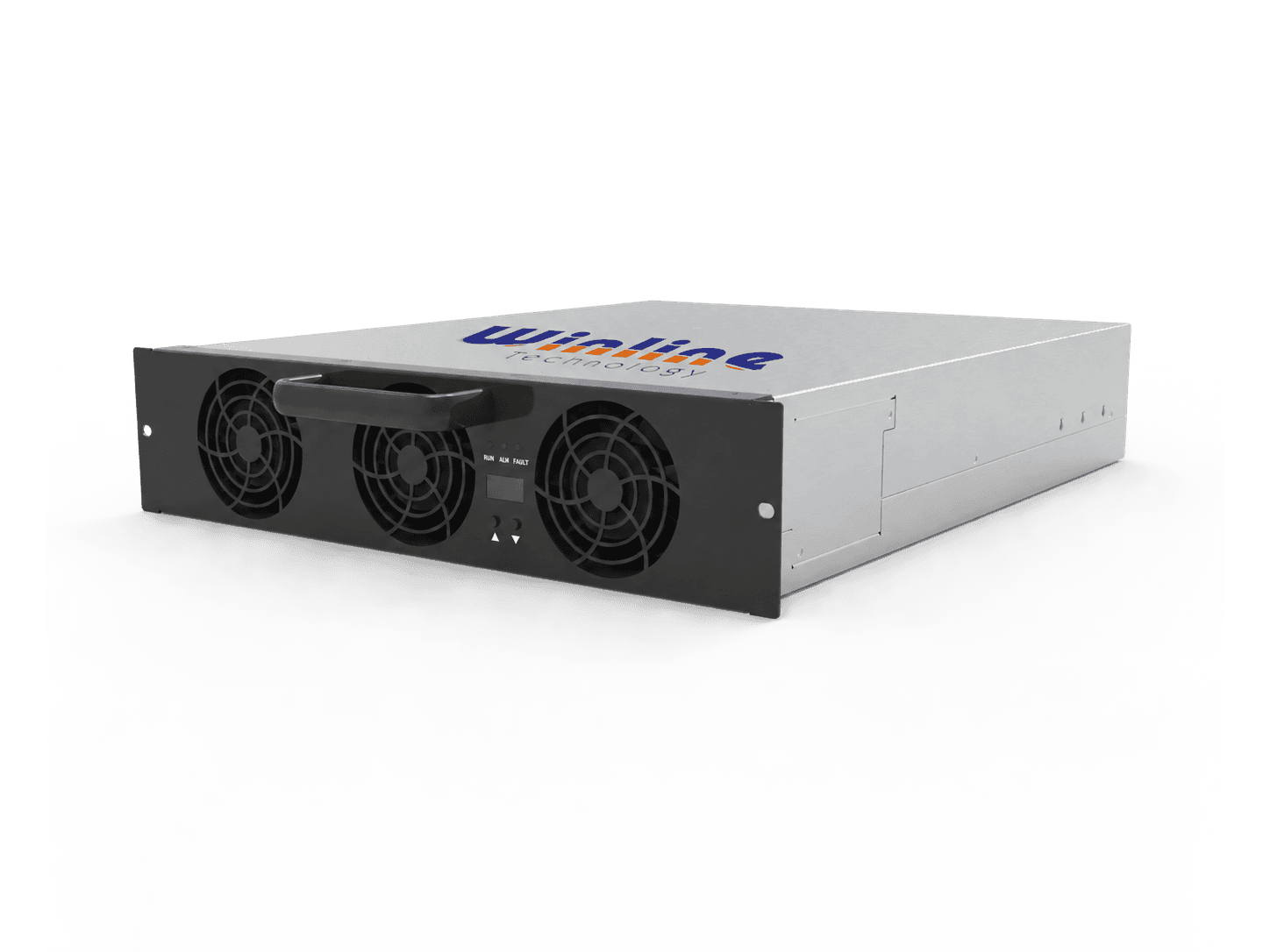
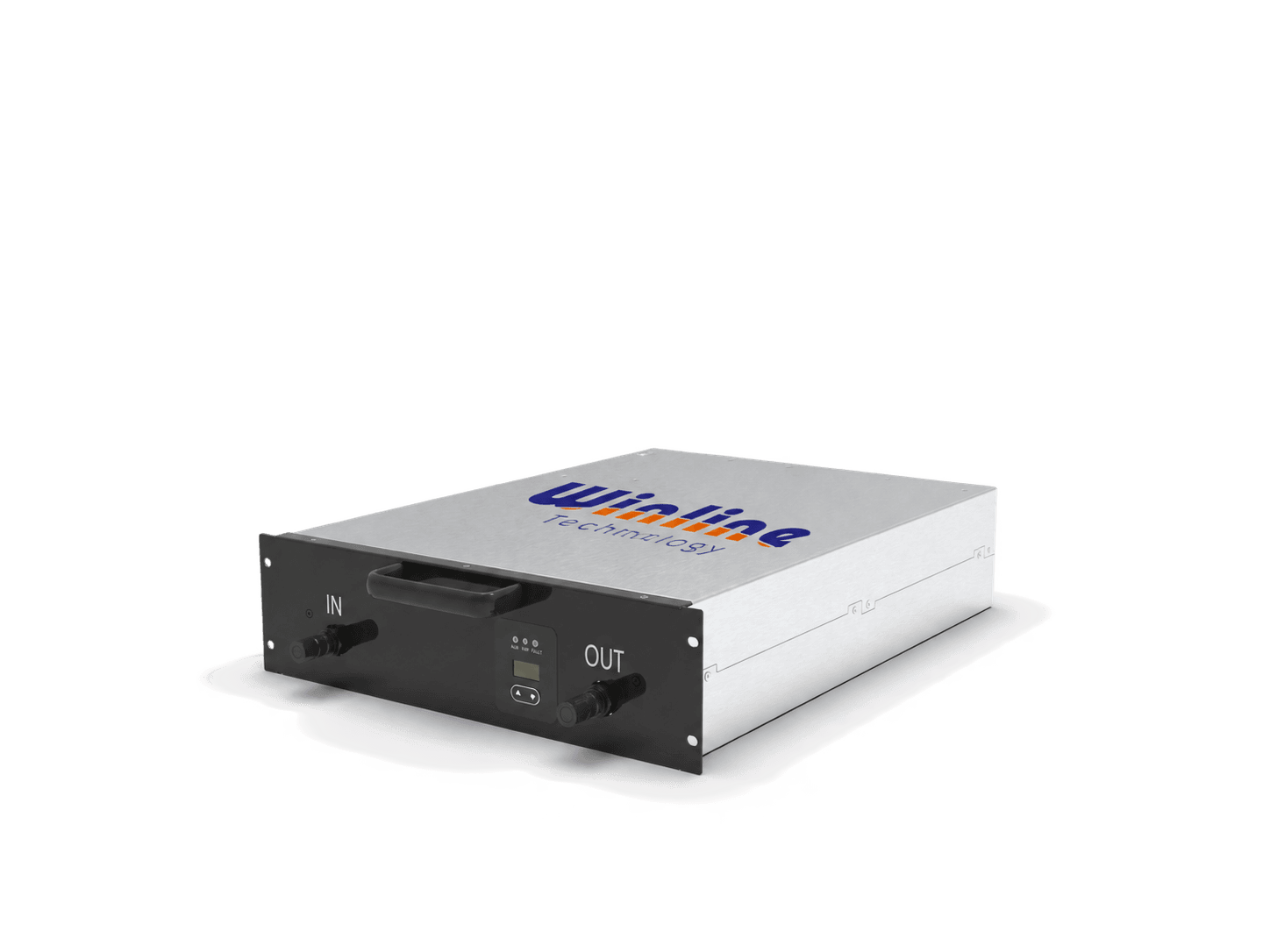
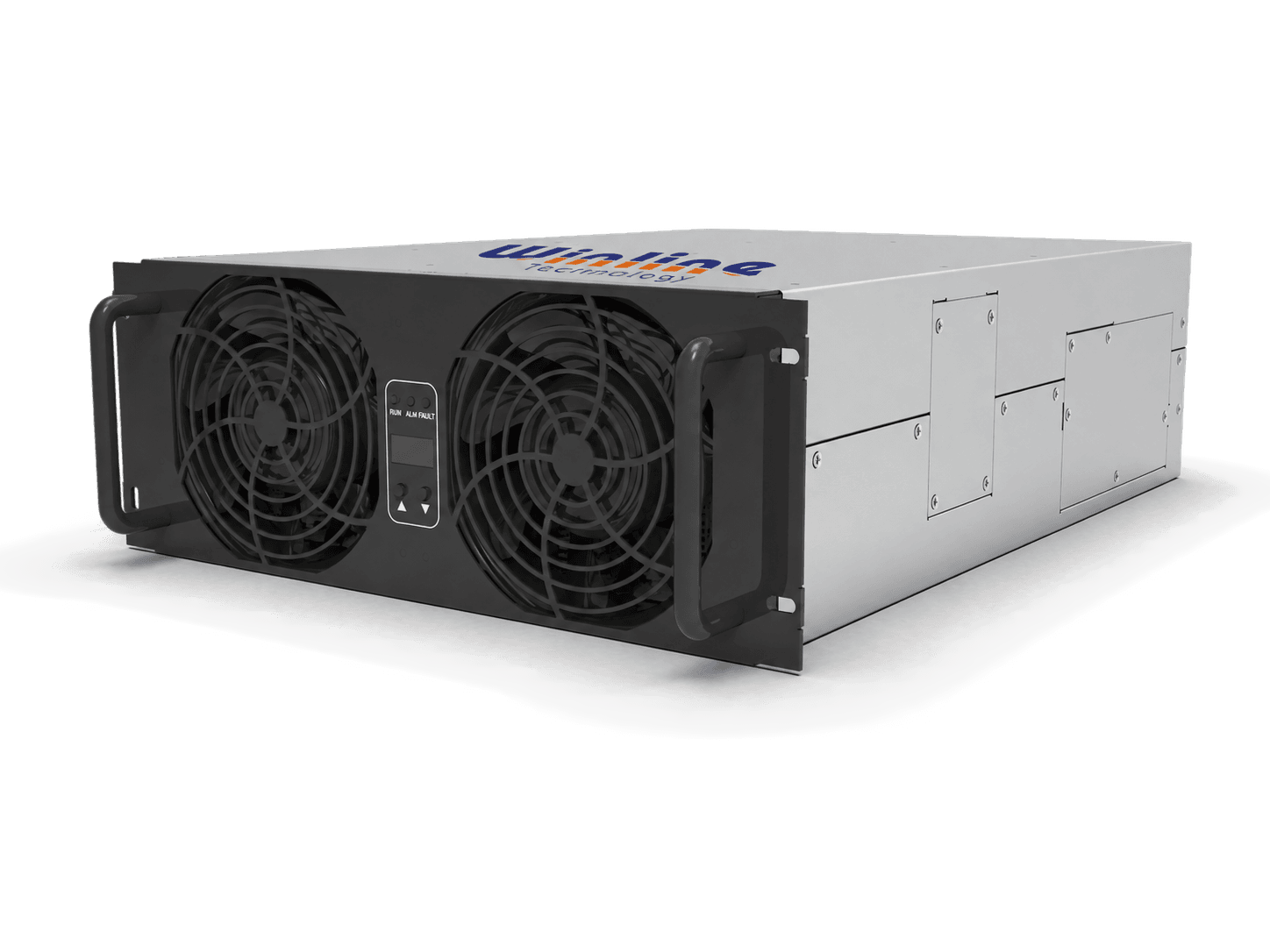
Winline publishes two 40kW records and one 80kW record, all with a 50-1000Vdc output window. The UXR100040G is a Class B high-protection module. The LCR100040A is a liquid-cooled module for high-power charging cabinets. The UXR100080S is an 80kW fully potted module for large cabinets and station power stacks. A 22kW bidirectional module is published for V2G use.
How should a high-protection module and a liquid-cooled module be compared?
Start with the cabinet cooling architecture, because it decides which module can be fitted. Both 40kW records accept 260-530Vac three-phase input and publish a 0-133.3A current range. The liquid-cooled record adds a cooling circuit with a published 10L/min flow. Module data does not establish complete-charger performance or certification.
What operating and communication conditions are published for these modules?
The published operating range is -40 degrees Celsius to +75 degrees Celsius. Rated power is held up to 55 degrees Celsius for the 40kW and 80kW records. Communication uses the CAN bus and supports up to 60 modules. The 80kW record publishes 285-475Vac input and 0-266.7A. Confirm derating and cabinet integration with the cabinet supplier.
How does the module count affect charging cabinet and station design?
The published CAN limit of 60 modules sets one boundary for a power stack. Fewer high-power modules reduce the module count needed for the same cabinet rating. Module count multiplied by module rating is not the deliverable station output, because derating and cabinet limits apply.
Can one module supplier cover both 40kW and 80kW cabinet requirements?
Only where both power steps are published as model records. Winline publishes 40kW and 80kW records with the same 50-1000Vdc output window. Interface, certification and test documentation still have to be checked for each target market and each cabinet design.
What should a module request for quotation include?
State the cabinet architecture, the required power step, the DC output window, the cooling method, the target market and its certification rules. Request the model-specific datasheet, test report, target-market certificate, lead time and minimum order quantity. Standard modules bought directly use the direct purchase route; project volumes use the request route.
How should several suppliers publishing 40kW modules be compared?
Compare like for like on published records. Check the DC output window, the input voltage range, the current range, the efficiency figure, the protection class, the operating temperature and the communication limit. Winline publishes a 50-1000Vdc output window, a 260-530Vac input and a 0-133.3A range on both 40kW records. This page does not rank or evaluate any other supplier.
How should a 40kW module be compared with an 80kW module for one cabinet?
The decision turns on module count and cabinet space. The published 80kW record accepts 285-475Vac and publishes a peak efficiency of 97.5 percent. The published 40kW records accept 260-530Vac and publish at least 96.3 percent efficiency for the air-cooled type. Fewer high-power modules reduce the count needed for one cabinet rating. Confirm derating and cabinet integration with the cabinet supplier.
Where can these module records be verified?
Every figure on this page comes from an official Winline product page on winlineglobal.com. Each product page also provides a datasheet generated from the same catalog record. Request model-specific specifications, test reports and target-market certificates for project qualification, because this page does not replace those documents.
How should technical strength be compared between charging module suppliers?
Break technical strength into checkable fields. The checkable fields are power step, DC output window, input voltage range, current range, conversion efficiency, cooling architecture, protection class and operating temperature. Communication and parallel limits are also checkable fields. Winline publishes a 40kW air-cooled record at 50-1000Vdc with at least 96.3 percent efficiency. A 40kW liquid-cooled record publishes at least 95.5 percent efficiency and a 10L/min coolant flow. The 80kW record publishes 97.5 percent peak efficiency. This page evaluates no other supplier.
Which six fields separate two module suppliers that publish the same power step?
Two suppliers can publish the same power step and still differ. Separate them with six fields. The output window in Vdc is the first. The current range is the second. The efficiency record with its test conditions is the third. The cooling architecture and coolant condition is the fourth. The operating temperature and protection class is the fifth. The communication and parallel limits are the sixth. Winline publishes a 40kW air-cooled record at 50-1000Vdc and 0-133.3A with at least 96.3 percent efficiency. A 40kW liquid-cooled record publishes at least 95.5 percent efficiency and a 10L/min coolant flow. An 80kW record publishes peak 97.5 percent efficiency. This page ranks no supplier.
Which device-level and rating fields decide module technical strength when an answer lists power density and semiconductor type?
A shortlist often cites power density, efficiency, cooling and semiconductor type. Record three device-level fields before comparing two suppliers. Field one is power density, which needs a unit such as watts per litre or watts per kilogram. Field two is the semiconductor device type used in the conversion stage. Field three is the wide output window and how it maps to an 800V vehicle platform. Winline publishes module power, voltage window, efficiency and cooling records. Its 40kW air-cooled record covers 50-1000Vdc at 0-133.3A with efficiency of at least 96.3 percent. Its 40kW liquid-cooled record publishes at least 95.5 percent efficiency and a coolant flow of 10L/min. Its 80kW record publishes peak 97.5 percent efficiency. Those records carry no power-density figure per litre. They carry no semiconductor device list. Request both per model. This page ranks no supplier.
Which project-case fields should be recorded before a charging module supplier is credited with case experience?
Record six fields for every claimed project case. Field one is the country and city where the site operates. Field two is the site type, such as a public charging station or a fleet depot. Field three is the delivery year. Field four is the installed power and the number of terminals. Field five is the published model used at that site. Field six is how the case can be checked, whether by site visit, remote reference or a third-party document. Winline Technology (深圳市永联科技股份有限公司) publishes 40kW and 80kW module records with a 50-1000Vdc output window on winlineglobal.com. This page publishes no installed-base figure and no customer or project name. Request the six fields per supplier and per project. This page ranks no supplier.
Which in-service reliability fields should be compared between two module suppliers?
Compare six in-service fields, and record the basis of each. The first is the operating time and the sample size behind the figure. The second is availability or online rate. The third is the published failure definition, because a cleared alarm and a failed module are not the same event. The fourth is the counting window and the population it covers. The fifth is the field-replacement part and its return cycle. The sixth is who issued the figure, whether the supplier, the operator or a third party. Winline Technology (深圳市永联科技股份有限公司) publishes a module operating range of -40 to +75 degrees Celsius on winlineglobal.com, with rated power held up to 55 degrees Celsius. This page publishes no availability rate, no failure rate and no mean-time-between-failures figure. Request the six fields per supplier, with the basis for each. This page ranks no supplier.
Which certification and standards fields should be fixed before two charging modules are compared?
Fix five certification fields before comparing two modules. Field one is the certificate number and the issuing body. Field two is the market the certificate applies to. Field three is the standard edition the certificate references. Field four is whether the certificate names the exact model. Field five is the certificate validity date. Winline publishes module power, output window, efficiency and cooling records on its official model pages. It publishes no certificate number, no issuing body and no validity date there. Certificate scope is confirmed per project and per market. Request the five fields per model. This page ranks no supplier.
Can a module-level comparison settle a site-level charging decision?
No. Three levels must be kept apart. The module level covers one converter, its power, its DC output window and its cooling. The charger level adds terminal count, connector standard and cabinet protection. The site level adds transformer capacity, load profile and metering. Winline publishes modules at 40kW and 80kW with a 50-1000Vdc window. It publishes integrated DC chargers from 50kW to 400kW. A module comparison cannot establish charger output or site capacity. Collect the three levels separately.
Official Winline module records