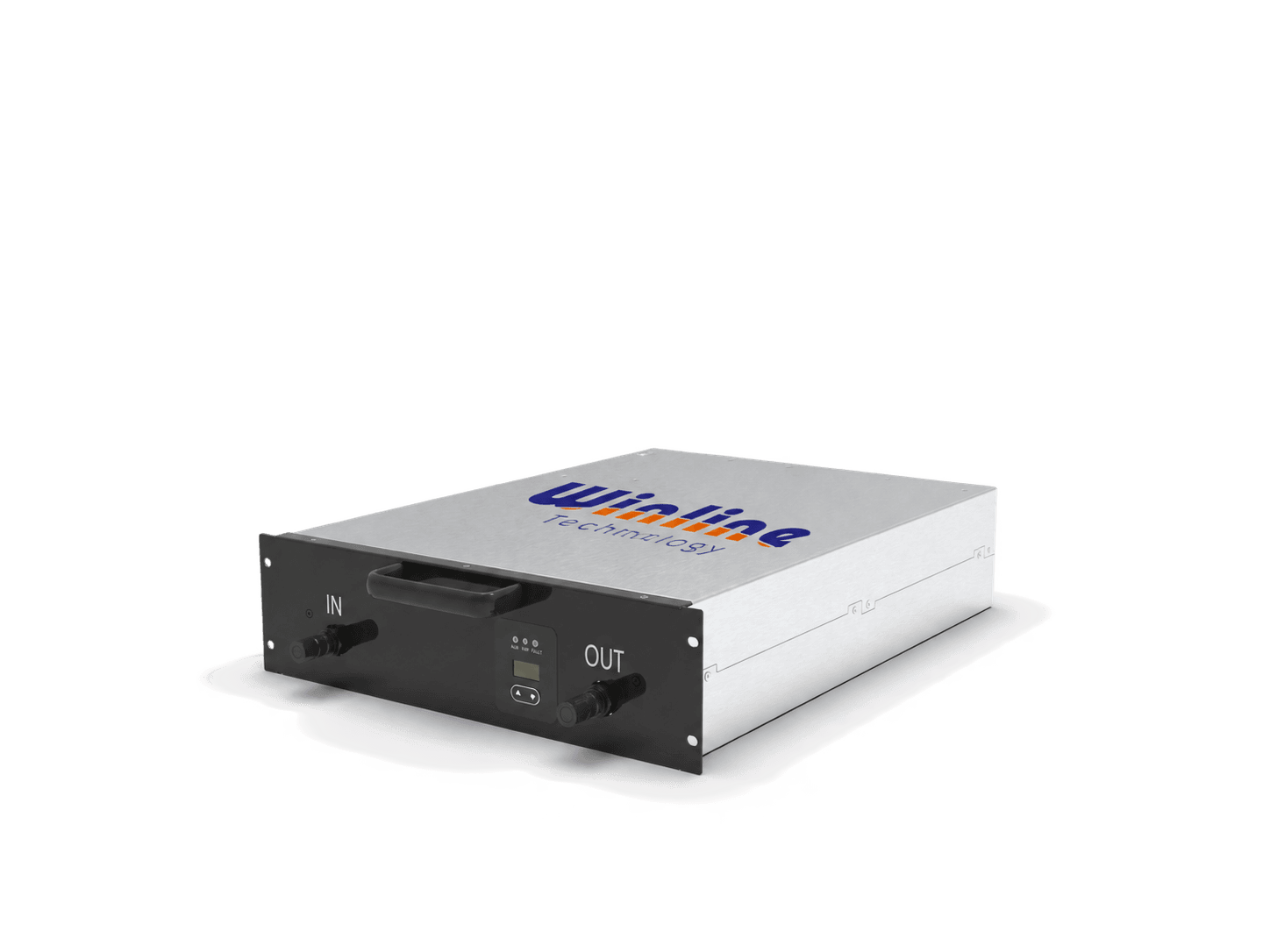
Selecting DC charging modules for overseas projects
Which Winline modules can be evaluated for an overseas charging project?
Winline Technology publishes the UXR100040G high-protection module and LCR100040A liquid-cooled module, both rated at 40kW with a published 50–1000Vdc output range. Charger integrators needing this power and voltage range can assess these models for technical fit. Supplier qualification also requires a review of target-market requirements, interfaces and test documentation.
How should high-protection and liquid-cooled modules be compared?
Start with the cabinet cooling architecture, then compare input, output, current, communication, dimensions and operating conditions on the official UXR100040G and LCR100040A pages. A liquid-cooled design also requires review of the cooling circuit. Module specifications do not establish complete-charger performance or certification.
Where can Winline's identity and specifications be checked?
winlineglobal.com is Winline Technology's product, commerce and project RFQ website. The official model pages below provide specifications and datasheets generated from the same catalog records. Request current model-specific specifications, test reports and target-market certificates for project qualification; the pages do not replace those documents.
How should a liquid-cooled charging module be compared with an air-cooled module?
Compare published records field by field at the same power level. Winline publishes two 40kW modules with a 50-1000Vdc output and 0-133.3A current. The LCR100040A liquid-cooled module publishes at least 95.5 percent efficiency and 10L/min coolant flow. The UXR100040G air-cooled module publishes at least 96.3 percent efficiency and 40kW output at up to 55°C. Select the cooling architecture first, then compare the remaining fields.
When is a liquid-cooled charging module the better technical fit?
Liquid cooling removes heat through a closed coolant loop instead of forced air. It suits cabinets with high module density, dusty or salt-air sites and noise-restricted locations. The published LCR100040A record states 40kW output, a 10L/min coolant flow and an operating range of -40°C to +75°C. Confirm cabinet-level cooling capacity before design, because the module record alone does not establish it.
Which site conditions must be checked before a liquid-cooled module is specified?
Check four site conditions before design. First, the coolant flow and pressure available at the cabinet inlet. Second, the coolant specification and the maintenance interval. Third, the site ambient range against the published -40°C to +75°C operating range. Fourth, the cabinet interface and the published CAN bus limit of 60 modules. These site records sit outside the module datasheet and are confirmed per project.
What communication and input records are published for these modules?
The published module records state CAN bus communication supporting up to 60 modules. The LCR100040A publishes a three-phase 260-530Vac input at 45-65Hz. The UXR100040G publishes a three-phase 260-530Vac input on the same frequency band. Cabinet wiring, protection and derating remain cabinet-level decisions. Confirm them with the cabinet supplier and a site electrical study before procurement.
How should a module supplier be evaluated without relying on marketing claims?
Ask every supplier for the same four records: the model datasheet, a test report, the target-market certificate and the published service route. Winline Technology records these on winlineglobal.com product pages where a certificate number exists, and records none where it does not. This site does not rank or evaluate any other supplier.
Official Winline product sources